

 Team Hellofilmy
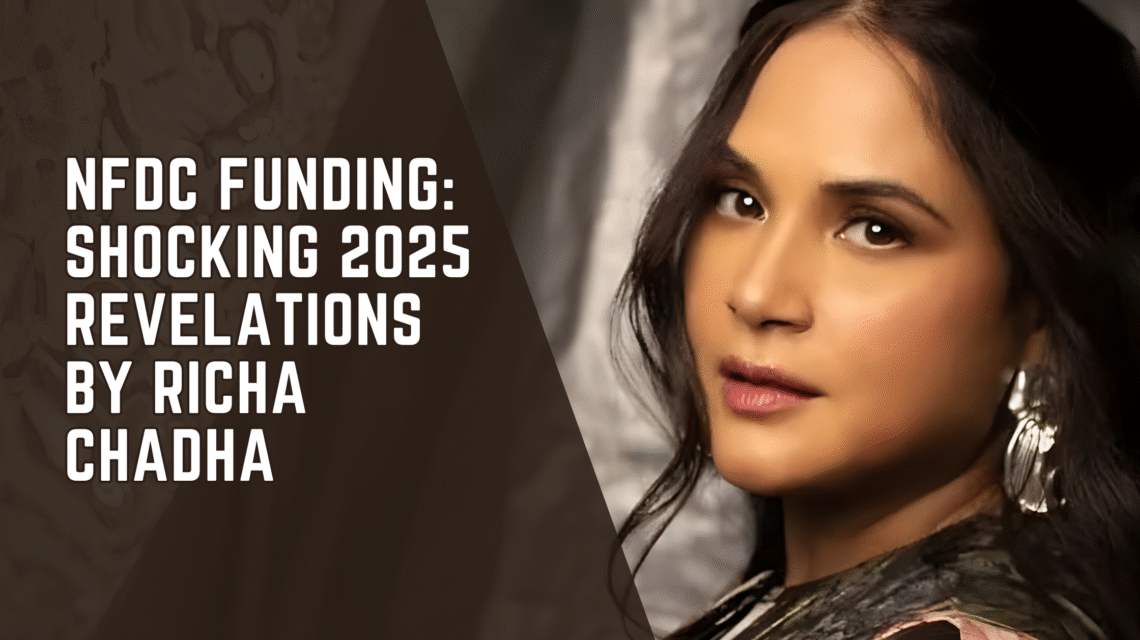
 NFDC funding has long been touted as the bedrock of independent cinema in India, but recent remarks by Richa Chadha have thrust the topic back into the spotlight. As actors, directors, and festival curators gathered at WIFF, the conversation sharpened around the realities of financing courageous, boundary-pushing stories. This piece dives into what happened, why it matters, and how the ecosystem could evolve to support ambitious indie cinema without compromising storytelling integrity.
At WIFF, a panel that included Shoojit Sircar, Rajat Kapoor, Deepa Gehlot, and Sridhar Rangayan unraveled the tension between artistic ambition and the practicalities of funding. Richa Chadha’s remarks anchored the discussion in a painful truth: while producers can become the sounding boards that understand a creator’s vision, the funding networks often determine which projects receive light and which do not. The core of the debate rests on the behavior of national bodies like the NFDC and their ability to fulfill the original promise of nurturing independent voices in the system.
NFDC’s historical mandate and the modern indie cinema funding puzzle
The National Film Development Corporation (NFDC) has branded itself as a catalyst for independent cinema in India, with a mandate to discover and sustain fresh voices, help with development, production, and distribution, and provide a platform for festival visibility. Yet the current discourse reveals a mismatch between the organization’s stated goals and the real-world outcomes that filmmakers experience. In theory, NFDC funding is meant to be a safety net for experimental stories that fall outside mainstream commercial cinema; in practice, the path to receiving funds remains opaque, highly competitive, and sometimes inconsistent in meeting promised timelines.
For many indie filmmakers, NFDC funding is a lifeline. It signals legitimacy, lowers the perceived risk for co-producers, and can unlock further capital from private investors. When NFDC funding is delayed or reduced, the ripple effects are immediate: delayed shoots, cash flow crunches, and, crucially, filmmakers being forced to either downsize their ambitions or walk away from audacious narratives. In recent years, the conversation has shifted from merely asking for support to demanding transparency and accountability in how funds are allocated and disbursed. This is where the debate around NFDC funding intersects with broader questions about how risk (and reward) is distributed in the Indian film economy.
Independent cinema thrives when financiers align with artistic risk—when the project’s potential to challenge norms, travel internationally, and spark discourse is recognized as value in itself. The absence of a consistent framework for NFDC funding creates an uneven playing field, where the most daring films may still struggle to obtain the capital they need. The result is a chilling effect: filmmakers avoid “too risky” projects, and the industry loses a pipeline of diverse voices that could otherwise redefine Indian cinema on a global stage. This is the broader context in which the NFDC funding conversation sits today.
Richa Chadha’s WIFF session: a candid look at funding dynamics
During the Waterfront Indie Film Festival session, Richa Chadha framed the issue through the lens of collaboration and risk-taking. She highlighted the importance of producers who believe in a director’s vision and will back it consistently, even when the road gets tough. The discussion surfaced a simple but persistent truth: talent alone is not enough; access to patient, mission-aligned capital is essential to realize ambitious storytelling.
Chadha challenged the attendees to consider why the most influential platforms often rely on MBA-driven decision-making, where the ultimate criterion is what fits an algorithm or a revenue model rather than a filmmaker’s creative promise. The question isn’t just about better marketing; it is about reimagining who has the authority to allocate resources for independent cinema. The dialogue suggested that the current ecosystem over-relies on global financial actors who may not fully grasp the nuances of Indian storytelling or the long development timelines typical of indie projects.
In a moment that pierced the room’s mood, Chadha recounted a blunt observation from her co-producers: “Sarkar se paisa nikalna bahut mushkil hai.” The Hindi line—quietly spoken but laden with meaning—summed up the systemic friction between creative risk and capital access. This sentiment accentuates the argument that independent cinema needs more than philanthropic or soft-money programs; it requires a robust, repeatable funding pipeline—one that can bear the costs of development, testing, festival runs, and eventual distribution. The NFDC funding line, as Chadha and others pointed out, is part of a larger framework that must be reimagined to avoid ceding storytelling control to external financiers who may not share a filmmaker’s long-term vision.
Girls Will Be Girls: funding promises vs. reception and release
The 2024 film Girls Will Be Girls, directed by Kani Kusruti and featuring Preeti Panigrahi and Kesav Binoy Kiron, stands as a case study in the complexities of indie funding. The film premiered at more than 20 festivals, including a notable premiere at the 2024 Sundance Film Festival, signaling strong festival visibility and critical interest. Its eventual release on Amazon Prime Video on December 18 added a streaming layer that can transform a festival darling into a widely accessible work. Yet, as Chadha disclosed, the NFDC promised a specific funding amount for the project but disbursed only half of that figure. Behind this discrepancy lay a broader pattern in which promised backing does not always translate into timely, full disbursement—creating a barrier to production schedules and overall project viability.
The discrepancy between promise and payout has a cascading effect. For a co-producer, this can constrain cash flow and force difficult decisions about pacing, staffing, and post-production resources. For the film’s creative team, it raises questions about the reliability of public support as a funding backbone. While this particular case involved Girls Will Be Girls, the broader takeaway is that a credible and predictable NFDC funding mechanism is essential for independent cinema to scale beyond a festival circuit and into mainstream markets.
Richa Chadha framed the Girls Will Be Girls situation not as an isolated incident but as symptomatic of a funding ecology that needs reform. If NFDC funding can be perceived as a slow, uncertain, or incomplete line of credit, then even a film with festival success and critical acclaim will struggle to reach its widest audience. The Netflix of the indie world is not merely a nice-to-have; it is a necessary engine for reach, experimentation, and long-tail revenue potential. In that sense, the Girls Will Be Girls example serves as a touchstone for policymakers, festival programmers, and filmmakers who are asking for more coherent support from national bodies that were created to sustain the art form, not hinder it.
Why NFDC funding matters today and what could fix it
In today’s cinematic ecosystem, NFDC funding is less about charity and more about strategic investment in cultural capital. It signals to private investors and international co-producers that India is serious about nurturing a pipeline of distinctive voices with global relevance. When NFDC funding is reliable, it unlocks downstream funding from VCs, hedge funds, and international film funds that seek projects with artistic ambition and market potential. Conversely, inconsistent or delayed NFDC funding dampens this external interest and limits the ability of Indian independent cinema to scale beyond national borders.
What could fix the current gaps? Several ideas repeatedly surface in discussions among filmmakers, program administrators, and policy scholars. First, transparency in fund allocation and disbursement timelines would reduce uncertainty for producers. Second, a formalized multi-year funding track for development, production, and post-production could provide a predictable cadence for budgets. Third, a pilot framework that pairs NFDC with external, clearly defined risk-sharing partners could de-risk projects and attract private capital without diluting artistic control. Fourth, explicit, measurable milestones tied to grant disbursements would create accountability without sacrificing the flexibility indie cinema often requires. These changes would not undermine the NFDC’s mission; they would operationalize it in a way that aligns with contemporary financing realities and the needs of fearless filmmakers who want to push boundaries.
Fundamentally, the indie cinema ecosystem benefits when the NFDC funding environment mirrors best practices from global models. We can learn from soft-money programs like certain cultural grants around the world, which provide non-repayable funds to seed ambitious work, while also creating more transparent repayable mechanisms for larger-scale projects. The goal is not a giveaway but a structured, credible funding pathway that signals to the industry that risk-taking can be rewarded with timely support rather than stymied by process delays. If these reforms take root, future projects could knit together festival prestige, streaming accessibility, and theatrical life without compromising the filmmaker’s creative voice or the integrity of the story.
Global templates and the promise of new funding architectures
Several international models demonstrate how a robust ecosystem can sustain independent cinema without turning it into a purely commercial enterprise. The Chanel Grant example cited in the WIFF discussion illustrates the potential of soft, non-repayable funds that allow filmmakers to experiment and reach audiences that might not be immediately profitable. While the Chanel Grant is not a direct substitute for a national film body, it represents a complementary approach: bridging the gap between art-house risk-taking and market viability. In the Indian context, combining similar soft-money opportunities with a transparent NFDC funding process could create a more resilient pipeline for independent cinema.
Another facet of global practice is multi-stakeholder participation. When a coalition of public bodies, private funders, and independent production companies co-finances a project, the risk is spread, and the film can navigate development, festival circuits, and distribution more smoothly. The WIFF panelists implied that the absence of a single anchor who comprehends both the creative and the commercial sides of film financing is a structural missing piece. Bridging that gap—through a dedicated fund or a formal advisory body that includes producers, financiers, and industry veterans—could yield more consistent NFDC funding outcomes while preserving artistic autonomy.
What filmmakers and industry players can do now
Filmmakers who navigate the NFDC funding process today can adopt practical strategies to improve their odds and the overall ecosystem’s sophistication. Here are actionable steps that align with the needs identified in the WIFF conversation:
- Develop a robust development pipeline and a clearly phased budget that demonstrates how every rupee will contribute to a film’s lifecycle from development to distribution.
- Document cases of past NFDC funding experiences (both positive and negative) to create a data-informed narrative that can persuade decision-makers to adjust timelines and disbursement schedules.
- Engage early with co-producers, distributors, and streaming platforms to establish distribution strategies that de-risk the project for NFDC funding approval.
- Explore parallel funding lines, including soft-money grants, private equity partners with aligned values, and international co-production opportunities, to ensure that a project remains financially viable even when NFDC funding faces delays.
- Advocate for a formal advisory council that includes independent producers who understand the creative process and the constraints of budget timelines, ensuring more predictable support for independent cinema.
For festival organizers, programmers, and policy advocates, a practical emphasis on transparency and accountability in NFDC funding processes can foster trust and invite new investment. When the ecosystem demonstrates reliability, future projects will be able to plan with confidence, and NFDC funding will evolve from a potential barrier into a strategic catalyst for bold storytelling that travels beyond national borders.
Frequently Askeded Questions
What exactly is NFDC funding?
NFDC funding refers to the financial support provided by the National Film Development Corporation of India to development, production, and distribution of Indian independent cinema. The goal is to nurture new voices and help films reach festivals, cinemas, and streaming platforms.
What happened with Girls Will Be Girls and NFDC funding?
According to Richa Chadha, NFDC promised funding for Girls Will Be Girls but disbursed only half. This discrepancy highlights the broader challenges around timely and complete disbursement, which can impact production schedules and the ability to bring ambitious stories to audiences.
How can indie films improve their chances of securing NFDC funding?
Filmmakers can present clear development roadmaps, transparent budgets, and staged disbursement plans, plus a strategy for distribution. Building a strong consortium with producers, distributors, and potential international partners can also demonstrate viability and reduce perceived risk for NFDC and other funders.
Are there models beyond NFDC funding that support indie cinema?
Yes. Soft-money grants, private equity with aligned cultural objectives, and international co-production funds are part of the broader toolkit. Global best practices emphasize transparent processes, risk-sharing, and multi-stakeholder collaboration to complement public funding and sustain creative risk-taking.
Conclusion: A path forward for NFDC funding and Indian independent cinema
The conversation at WIFF, crystallized by Richa Chadha’s remarks and the Girls Will Be Girls funding episode, underscores a shared truth: independent cinema cannot rely on a single funding source that is opaque or inconsistent. The vitality of Indian storytelling depends on an ecosystem that aligns artistic risk with credible capital. NFDC funding, if modernized with transparency, multi-year commitments, and exposure to diversified capital, can become a reliable engine for ambitious films that travel far beyond festival screens. The industry has shown it can produce films that resonate globally; the next step is to ensure the financial pathways are just as brave as the stories they aim to tell. By embracing reform, increasing accountability, and exploring complementary funding models, NFDC funding can evolve into a resilient backbone for independent cinema in India, empowering filmmakers to chase bold ideas without sacrificing financial viability.

 Dhurandhar Post Midnight Shows Added Release: Ranveer Singh Creates History
  Bigg Boss 19: Malti Chahar Eviction Confirms Top 5 Finalists
  Akhanda 2 Release Postponed: Why Balakrishna’s Film Was Delayed Amid Legal Row
  Kunickaa Sadanand Defends Salman Khan: Bigg Boss 19 Actress Opens Up on Lawrence Bishnoi Case
  Dhurandhar Advance Booking: Ranveer Singh Film Creates Sensation With Ticket Prices Over ₹2000
  Samantha Wedding News: Full Details of Intimate Ceremony