

 Team Hellofilmy
 The Taj Story PIL has emerged as a flashpoint in India’s legal and cultural discourse. A public interest litigation filed in the Delhi High Court seeks decisive action against the upcoming film The Taj Story featuring Paresh Rawal. The controversy centers on a poster that many say reopens a long-standing debate about the Taj Mahal’s origins and the broader relationship between history and national identity.
Advocacy in favor of the petition argues that the film’s framing amounts to a distortion of established history and could inflame communal tensions. Critics of the poster point to a claim that a sacred, religious symbol is co-opted for cinematic drama, potentially undermining trust in historians and educated discourse. The Taj Story PIL therefore sits at the intersection of freedom of expression, cultural memory, and public peace.
Background of the PIL
The Delhi High Court is asked to review the certification granted to The Taj Story for release, with a focus on whether the film’s narrative breaches legal boundaries or public order expectations. The petition requests that the CBFC reexamine the film’s content and consider mandatory cuts if needed to safeguard communal harmony. In addition, the plea calls for a prominent disclaimer stating that the film presents a contested interpretation rather than a proven fact, so as to reduce misperceptions among audiences.
Proponents of the PIL emphasize that heritage sites like the Taj Mahal carry universal significance and are protected by UNESCO as World Heritage assets. They contend that misrepresentation can affect not only national sentiment but also international perception of India’s historical scholarship. The Taj Story PIL therefore frames a larger question: should cinema be permitted to present speculative history as settled fact when it concerns widely revered monuments?
Poster Controversy: What the Poster Depicts
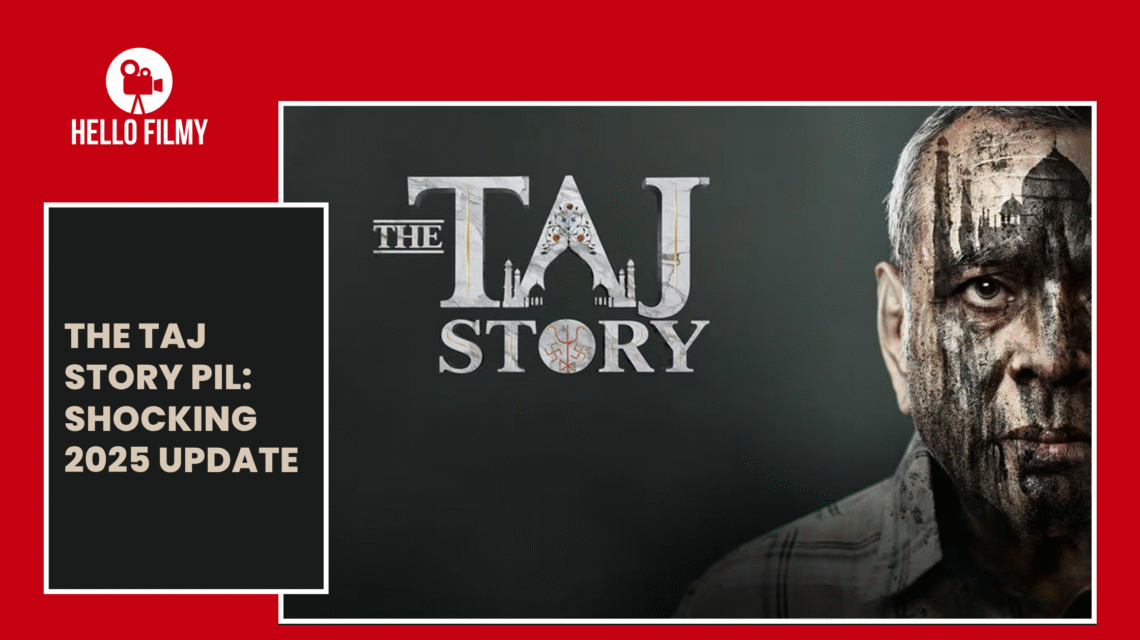
The poster at the heart of the dispute depicts a statue of Lord Shiva emerging from the Taj Mahal’s dome, a design that some view as provocative symbolism challenging conventional history. Supporters argue that such imagery is artistic expression and should be protected as a form of independent cinema. Opponents, however, say that the image weaponizes religious iconography and fosters a false narrative about the monument’s origin—an origin which most historians consider to be a product of Mughal-era Islamic architecture with syncretic influences.
The Taj Story PIL highlights the risk that provocative visuals may inflame tensions and provoke reactions from political actors and fringe groups. In a country as diverse as India, visual messaging about sacred sites can quickly move from controversy to conflict if not carefully managed. The petition asserts that the poster and its surrounding publicity could amplify divisive rhetoric and undermine public peace.
Legal Framework: CBFC, Certification, and Content Regulation
Central to the PIL is the role of the CBFC in safeguarding public order while safeguarding the creative freedom of filmmakers. The petition argues that the CBFC must ensure that films do not present contested histories as established facts, especially when those histories touch on sensitive religious and national symbols. It requests consideration of a disclaimer and, if necessary, cuts to remove or alter elements that could inflame communal sentiments.
The CBFC’s mandate is to balance freedom of expression with the maintenance of public order and cultural harmony. In high-profile cases, the board has grappled with questions about how to rate and certify content that challenges accepted historical narratives, questions that are heightened when the subject involves widely revered monuments and religious iconography. The Taj Story PIL foregrounds these ongoing debates about censorship, artistic license, and the responsibilities of filmmakers toward diverse audiences.
Historical Narrative vs. Artistic License
In evaluating The Taj Story, authorities will weigh whether the film falls into permissible documentary or educational framing, or whether it cross the line into sensationalism that could mislead the public. The petition asserts that the film’s framing could be perceived as a claim of historical fact, which could require greater scrutiny and context so as not to misinform viewers who rely on historical consensus.
The Historical Debate: Taj Mahal Origins and Public Perception
Historically, the Taj Mahal is widely regarded by scholars as a mausoleum built by Shah Jahan in the 17th century, reflecting Indo-Islamic architectural synthesis. Debates about its origins are part of a broader conversation about heritage interpretation, political memory, and national identity. The Taj Story PIL taps into these debates, suggesting that cinema can influence how history is remembered by future generations. The petition warns that presenting speculative theories with broad public reach may alter public perception of a UNESCO World Heritage Site, which could have international ramifications for tourism and diplomacy.
For supporters of the film, history is dynamic and subject to reinterpretation as new evidence emerges. They argue that cinema has long been a vehicle for exploring controversial questions about the past and that responsible storytelling can provoke productive dialogue rather than harm. The ongoing tension between historical evidence and narrative creativity makes The Taj Story PIL a case study in how societies negotiate memory, controversy, and freedom of expression.
Implications for Public Discourse, Tourism, and National Image
Public discourse surrounding heritage sites is intimately tied to a nation’s image on the global stage. The Taj Story PIL raises questions about how Indian audiences, as well as international visitors, interpret portrayals of a site recognized by UNESCO. Some stakeholders worry that sensationalized content could impact tourism or invite diplomatic sensitivity, especially if the narrative is perceived as disrespectful toward religious symbols. Others contend that open discussion about history should be encouraged, even when it challenges established narratives, provided it is supported by credible scholarship and clearly labeled as interpretive rather than factual.
Beyond tourism, the PIL touches on how media coverage amplifies narratives about national identity. In today’s media ecosystem, a single poster or trailer can reach millions within hours, elevating the stakes for responsible storytelling. The Taj Story PIL thereby becomes a test case for balancing artistic exploration with the duty to avoid inflammatory messaging that could destabilize social cohesion.
What Happens Next: Possible Outcomes and Impacts
The Delhi High Court could take several routes in response to The Taj Story PIL. It might direct the CBFC to reexamine the film’s certification, request clarity in the disclaimers, or mandate cuts if a portion of the film is deemed likely to disrupt public peace. Alternatively, the court could determine that the film’s content is within the permissible ambit of artistic expression, while urging producers to accompany the release with contextual material that frames the narrative as contested history rather than conclusive fact.
Regardless of the legal outcome, the case is likely to influence how filmmakers approach controversial subjects in the future. It may push producers to foreground historical scholarship, consult with historians during the scripting process, and incorporate explicit disclaimers that guide viewers toward informed interpretation. The Taj Story PIL thus serves as a bellwether for the evolving relationship between cinema, scholarship, and public policy in a diverse democracy.
Way Forward: Balancing Expression, History, and Harmony
To navigate this complex terrain, a collaborative approach may help. Filmmakers, scholars, and policymakers can work together to ensure that controversial narratives are presented with transparent sourcing, balanced representation, and clearly labeled context. The Taj Story PIL invites constructive dialogue about how to preserve freedom of expression while protecting public order and respecting the sensitivities of various communities. A responsible path forward could include:
- Transparent disclosures about research sources and competing theories.
- Contextual trailers and disclaimers that distinguish between interpretation and established fact.
- Engagement with scholars to vet claims that touch on religious symbolism or historical consensus.
- Public education initiatives that help audiences understand how monuments are interpreted across histories.
In short, The Taj Story PIL is less about a single poster and more about how a society negotiates memory, controversy, and the right to artistic expression in the public square.
Frequently Asked Questions
What is the The Taj Story PIL? The Taj Story PIL refers to the public interest litigation filed in the Delhi High Court challenging aspects of the film The Taj Story and its promotional materials, including the controversial poster, on grounds of potential historical distortion and threat to public harmony.
What action can the CBFC take? The CBFC can re-evaluate certification, request edits or contextual disclosures, and set guidelines for release that clarify contested history versus documented fact.
Could films be censored for controversial themes? Yes, within the framework of law and constitutional protections, especially when there is a reasonable risk of inciting violence or communal disharmony. The Taj Story PIL highlights this ongoing tension.
What impact could this have on viewers and heritage discourse? The outcome could shape how future historical narratives are presented in Indian cinema, encourage more rigorous historical sourcing, and influence public understanding of heritage sites like the Taj Mahal.
Conclusion
The Taj Story PIL underscores the delicate balance between artistic experimentation and civic responsibility in a richly diverse society. As legal scrutiny unfolds, it offers a pivotal moment to reexamine how history is depicted in popular media and how audiences are guided to interpret contested narratives. Whether The Taj Story ultimately garners a clear-cut certification path or is tempered by contextual labeling, the case will likely influence the standards by which historians, filmmakers, and policymakers collaborate to safeguard public harmony while preserving the integrity of cultural memory. The Taj Story PIL therefore serves not only as a legal challenge but as a catalyst for a thoughtful, informed conversation about history, identity, and creative freedom in 2025 and beyond.

 Bigg Boss 19: Malti Chahar Eviction Confirms Top 5 Finalists
  Akhanda 2 Release Postponed: Why Balakrishna’s Film Was Delayed Amid Legal Row
  Kunickaa Sadanand Defends Salman Khan: Bigg Boss 19 Actress Opens Up on Lawrence Bishnoi Case
  Samantha Wedding News: Full Details of Intimate Ceremony
  Bigg Boss 19: Salman Khan Madhuri Dixit Reunion Goes Viral
  Barota Trends Globally | sidhu moosewala latest news update